Bermondsey Girl, my first novel published by an actual publishing house, Water Dragon Publishing, is due to release July 22nd! You can preorder right now on Kindle, and it will go wide later this month, with print books also available. Go to the publisher’s website for those marketplaces.
It’s a funny thing, going from being a fully independent author to a hybrid one. I’m used to being in control of every aspect of publishing so this was a paradigm shift. Although it was nice not being responsible for every. single. detail. For that I am grateful to Water Dragon for doing all the things. I just had to write the book.
Now I have to digress here to talk about the book itself. I wrote Bermondsey Girl a while ago (its working title was The Hollowness) but even though I liked the story, it didn’t feel like it fit in with the rest of my work. All my other books are set in the past, with fantastical elements. This story is set in a neighborhood in London in 2080, where climate change has really impacted the poor people living near the River Thames. Really different, right? Except when I started talking about it to my author friends (shout out to Scott, Marvin, and Dover), they pointed out that the heart of the story isn’t the setting. It’s the characters, especially the protagonist, Idonny.
Idonny is young, isolated, deprived, but still yearns for something more. Her story in the book begins with her at the whims of the tough blokes who also live in the dilapidated tower block she calls home. She has no agency. She gets passed from man to man like a toy.
The story is her journey towards being herself, finding her joy and her freedom.
Which to be honest is a pretty common thread throughout all my books. So I guess Bermondsey Girl does fit, even though she’s wearing machine-extruded baggy t-shirts and leggings, instead of corsets and petticoats.
Like I said, you can preorder it right now. If you do, please let me know what you think.
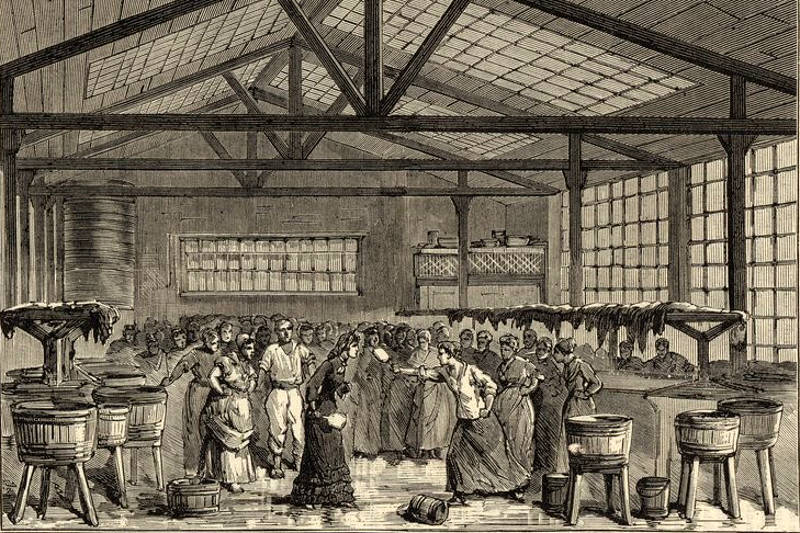
Not every scene makes it into the final manuscript, not even ones you REALLY like. This is one I cut out of Her Runaway Lady. Louise-Marie, the runaway lady of the title, is instructed by her coworker (and love interest) Solange in the fine art of laundry the 19th century Parisian way at a washhouse (the lavoir).
It was Sunday and the shop was closed. Solange was up and dressed far too early unless she was going to church. Louise-Marie squinted at her. Her outfit looked worn, not something she’d wear to church. Louise-Marie blinked, trying to rouse herself.
“Hey, sleepyhead, we’re going to the lavoir today. You’d better get moving if you want to come.”
Louise-Marie yawned and stretched. “The wash house? Why?”
Solange laughed and hefted a bundle of her undergarments. “To wash our linens. They won’t wash themselves.”
Louise-Marie sat up and stretched. The frigid air made her shiver and she grabbed her cashmere shawl from the bed where it was acting as an extra blanket. She wrapped it around herself and yawned. “I wish I could afford to pay for a laundress. I don’t have the slightest idea how to wash my clothing. Will you show me how?”
Solange laughed. “Pay for a laundress? In my dreams. Of course I’ll show you how but I’m not doing it for you.” She blew her a kiss. “No matter how pretty you are.”
Louise-Marie smiled in return, a flush heating her cheeks. “Is the lavoir very far?” Louise-Marie didn’t know this arrondissement well but she knew some of her mother’s friends lived closer to the river. Walking through the streets in daylight was risky so she tried to limit how much time she spent outside.
“Are you worried about carrying your laundry too far? It’s only just down by the river. And don’t worry, it’s not one of the bateaux-lavoir.”
Louise-Marie gaped at her. “You mean one of those laundry barges on the river that everyone wants to get rid of? I wouldn’t step foot on one of those if you paid me all the francs in Paris.”
Solange shook her head. “I won’t let any of those loose laundresses near you. Just get out of bed and get dressed. Nothing fancy. It’ll get ruined. You can borrow one of my old hats since yours are in the window. But you need to hurry. The others are waiting.”
With a speed that surprised her, Louise-Marie threw on a plain wool dress. Her maid would have been shocked at her ability to dress herself. Louise-Marie was proud that she could take care of herself without a servant. Now she would go further and do her own laundry. A thought occurred to her.
“Don’t I need some kind of soap to wash my linens with? All I have is my bar soap that I wash with. Will that work?”
Solange held up a rough bar of off-white soap. “I have this. You can bring your fancy soap. It’ll do the job, but it’s a bit of a waste.” She sniffed her soap and wrinkled her nose. “Might smell nicer than this though.”
Louise-Marie had brought several of her soaps from home in her toilette case. Who knew how long they would last if she was using them to wash clothing. She shrugged. At least she’d smell nice for a while before it ran out. Maybe Solange would enjoy her in nice-smelling undergarments. She hide her smile before Solange could ask about it, then tucked her bundle of undergarments into a linen sack. She tied on the poke bonnet she’d borrowed from Solange. “Ready. Can we stop for a coffee and a bite to eat on the way? I’m starving.”
“I can’t afford much. I sent my last paycheck home to Maman for Lucie’s doctor.”
Louise-Marie held out a hand to Solange. “Then let me treat you. With my abundant pay, I think I can afford a single cafe au lait for you. Maybe even a croissant if you’re nice to me.”
Solange took her hand and they giggled as they left the little garret.
No one else was on the stairs as they made their way down, still holding hands. Louise-Marie dared not even look at Solange, sure she’d snatch her hand back at the slightest provocation. Her slightly rough fingers rubbed Louise-Marie’s skin, a sensation that she enjoyed. They reached the workroom at the bottom of the stairs and Solange pulled her hand out of Louise-Marie’s. She suppressed a sigh. The other milliners were waiting there.
Jeanne was tapping her foot impatiently and glowering. “About time. Was Mademoiselle getting her beauty rest?”
Solange frowned at the framer. “Hush, Jeanne, we’re here, aren’t we? It’s Sunday and I didn’t want to get up early either.”
Jeanne turned with a huff and they all made their way to the side door to exit onto the street.
It was early enough that the streets were quiet, just a few carriages with trotting horses clattering along. Louise-Marie looked around as they traversed the empty streets to the lavoir, not expecting to see anyone she knew from her former life out at this hour but anxious just the same. Her heart raced and she kept her head down, hiding her face with the brim of the bonnet.
The lavoir was larger than she’d expected, the room full of steaming tubs of water and women talking as they scrubbed and rinsed their laundry. The steamy heat flushed her face immediately. She breathed in the smell of lye then coughed at the acrid fumes.
Solange tugged her to the person in charge. “We need to pay for our time. It’ll take us a few hours to wash and dry everything.”
The milliners handed over their payments and hung up their hats and cloaks before claiming tubs already full of warm water. Solange dumped her linens into one, gesturing to Louise-Marie to do the same. They scrubbed the clothing with their soap, then dumped buckets of boiling water into the tubs. Steam rose, making Louise-Marie feel faint. The exertion of the scrubbing was more effort that she could ever remember making. She glanced over at Solange who stood next to her, frowning while she scrubbed at her clothes. Damp curls clung to her face.
Louise-Marie itched to brush Solange’s curls back but kept her hands to herself. “You make it look so easy.”
Solange looked up, the frown dropping from her face and a cheeky grin taking its place. “I’ve done this a lot more than you have, little aristo.”
Louise-Marie plunged her hands into the water and squeezed out the clothing. “I’ve never washed my own clothing. I had no idea it was such hard work.”
Solange turned to her with one hand on her hip. “And yet here you are. Is your freedom worth all this effort? What I wouldn’t give to have someone else take care of my clothing.”
Louise-Marie lowered the clothing back into the water. She shook her head, sadness stealing across her. “It’s hard work but yes, it is worth it. I know I sound like an entitled whiny brat but that life was stifling. You would hate it, I promise. Your every move, word, even your expressions noted and criticised. You have to be conscious of how you appear in every moment or you are condemned as being inferior or unladylike or ill-bred.” Her voice had risen and the other women nearby stared at her. She ducked her head, her face flushing even brighter, and resumed scrubbing.
“I know what it feels like to be condemned as being ill-bred. It happens in the shop every time an aristo comes in. Except for those doctor ladies. That’s why we asked for your help serving customers.”
Louise-Marie didn’t want to revisit that topic. She had already agreed to the plan. “Oh yes, the doctors. Have you heard anything more about Claude getting a spot at that veterans’ hospital?”
“Not yet. She did say it might be a while. Are you still worried about being seen by someone who knows your family?”
Louise-Marie lifted the heavy dripping clothing out of the tub and dumped it onto the draining rack. “Of course I’m still worried.” She watched the water run out of the fabric, rivulets making their way down to the drain. How could she explain to Solange her certainty that being more visible at the shop was a mistake? “I need some fresh air and I still want my breakfast. Can we take a break after we get these into the drying room?”
They wrung out their clothing and hefted the sodden masses to the drying room, then hung the petticoats and camisoles and combinations on large wooden racks. Gusts of air from the hot air blower blasted them, making Louise-Marie even warmer.
Solange headed to the back door of the lavoir. “We’ll have to wait just outside while it dries. If we leave, someone will probably steal our clothes.”
The chilly air outside was welcome and Louise-Marie breathed in deeply. “Thank heavens. I thought I was going to melt in there.”
Solange’s mouth twisted into a scowl. “Poor you. Just wait until summertime. If you’re still here and haven’t gone running back home.”
Solange hadn’t heard anything she’d said about her life with her family. She shot a sorrowful look at her. “I’m going to pick up some croissants at the boulangerie on the corner. Do you want one?”
Solange smiled, not seeming to notice Louise-Marie’s mood. “Merci. I’ll keep an eye on our clothes.”
Louise-Marie trotted down the alley to the corner and stopped, realising that she hadn’t worn the concealing bonnet. The street was busier than when they’d arrived at the lavoir and nicer quality carriages were passing by, their well-off passengers out for visits. She shrank back against the wall of the alley, scanning the passing carriages for familiar faces. Her heart pounded. She shouldn’t be out here, anyone could spot her. With trembling legs, she turned and scurried back to the door of the lavoir.
Solange raised her eyebrows as she approached. “No croissants? Were they out?” She peered at Louise-Marie’s face and took hold of her arm.. “You’ve gone all pale. What happened?”
“Nothing. Nothing happened. I just got frightened.” She ducked her head.
Solange bent to look into Louise-Marie’s eyes. “What frightened you, cherie?” Her voice was soft, calming, as if she were speaking to a scared child..
Louise-Marie squeezed her eyes shut, willing herself not to cry. She always seemed to cry in front of Solange. “I was frightened that one of the passing carriages would have someone I know in it.”
Solange gave her a little shake. “And did you see anyone?”
Louise-Marie shook her head.
“Ma chere, you can’t live your life always being afraid. Paris is full of many people. You’ll probably never see someone your mother knows.”
Louise-Marie looked up, her smile watery, and threw her arms around Solange. “Thank you for reassuring me. I’ll try to remember that.”
Solange squeezed her tightly. Louise-Marie could feel her warm breath in her hair and she relaxed into Solange’s embrace. Solange nuzzled against Louise-Marie’s hair then stepped back. “We should check on our clothing.”
The cold crept back and Louise-Marie shivered, missing Solange’s embrace and still hungry.
Here’s a sneak peek of Chapter one, where we meet Solange, our protagonist.
Solange ran her cold fingers across the crown of the hat she was working on, its velvet soft under her fingertips. A draft rattled the millinery’s floor-to-ceiling windows and plucked at the hem of her skirts. She shivered. Madame Poulet kept her establishment colder than Solange would like. Surely she could afford a little more wood for the stove.
Solange had become head trimmer at Madame Poulet’s after five years of hard work and one day, she hoped to take over the millinery. Then she would properly heat the workroom.
Dreams were lovely but at present, she had yet another bonnet to make for the middle-class women in the third arrondissment. She stood up from her workbench and stretched. The stool rocked on its uneven legs. When she was in charge of the shop, she was going to fix that wobbly stool, but not today. She was too busy trimming hats to bother fixing furniture. The flame of the oil lamp flickered as she walked by it to the framers’ bench.
“Jeanne, have you finished the frame for Madame Thibault’s bonnet? She’s expecting it to be finished the day after tomorrow.”
The framer peeked up from her work. “Just about.”
Solange leaned over to the framers’ bench, cluttered with wire and pieces of buckram. The smell of the pungent glue the framers used tickled her nose. She peered down at the bonnet frame in Jeanne’s hands. “Hold on. It’s twisted right there. The wire isn’t smooth.”
Jeanne huffed out a breath and rolled her eyes. “I know but I’ve already stitched it down. It’ll take ages to redo. Can’t you hide it with some trim?”
Solange grimaced. She could cover the flawed frame with some cleverly applied trim but she disliked poor quality.
Madame called through the tapestry curtain dividing the workroom and the shop, “We don’t produce shoddy work in this establishment, Jeanne. Fix the frame.”
Jeanne and Solange exchanged rueful looks. Madame heard and saw everything.
Jeanne shoved the frame away and twisted her face into a grimace. “It’s going to take ages to fix this and I’m already behind.” Jeanne’s voice trembled.
Solange squeezed her shoulder and took the frame. “No, it won’t. You just have to unstitch the end and twist it smooth with the pliers. It’ll be fast. Here, let me show you.”
Jeanne passed the little pliers to Solange and helped brace the frame. Within a few minutes, the frame brim was smooth and the stitches replaced.
“That’s amazing! Merci. How did you learn to do that?” Jeanne’s brown eyes shone.
Solange grinned and tipped her chin up, filled with pride. “I’ve done every job in this shop. I was a framer before being promoted to trimmer. And before that, I was an errand girl like Amelie.”
“You know all the tricks. You’ll have to show me more.”
“Not today, my friend, I have far too much work of my own.”
Solange sauntered over to the commodious fabric cupboard that stretched along most of one wall, and rummaged through for the fine grey wool the customer had requested to cover the bonnet. It was to be an everyday hat, something to keep off the rain, so Solange couldn’t indulge herself creating elaborate embroidery or plumage. Still, it would be elegant. She would make sure of that. Nothing left her bench that wasn’t at least elegant. Solange carried the bonnet frame back to her workbench and sat down on the rickety stool.
She glanced over at Yvette, her fellow trimmer. The woman was close to her age and heavily pregnant. Today was her last day of work at Madame Poulet’s. Solange would miss the competent Yvette with her dry wit.
“Are you ready to give up work to stay home with the baby, Yvette?”
Yvette rubbed her back and stretched. “Oh yes, and it will be good to put my feet up for a bit before the baby arrives. My ankles are huge. And my fingers are sausages!” She showed her swollen hands to Solange.
“Poor you! How can you sew when you can’t bend your fingers?” Solange inwardly berated herself for not noticing Yvette’s puffy fingers earlier.
Yvette shrugged. “It’s awkward.”
Solange pushed the wool for the bonnet frame over to Yvette. “Here, why don’t you cut the fabric for this and I’ll finish sewing on that trim. You can manage the scissors, right?”
Yvette took the fabric and smiled at Solange. “You’re sweet. I can manage cutting, I think.”
Solange nodded and picked up the hat Yvette had been working on. The little hat had tight spots to angle a needle into. It was no wonder Yvette had struggled. Solange bit her lip and held the hat up to the light for a better view. The light from the tall windows was meagre today, obscured by the rain sluicing down the glass. Daytime rain. It was so inconvenient.
“I miss the guaranteed sunny days before they turned off the Weather Machines, don’t you?”
Yvette’s gaze bounced from Solange then to the curtain dividing the room from the shop. “Hush, who knows who could hear you?”
Solange sighed and slumped a little against her corset. “I know. Forbidden technology. Unnatural. But I really would like a little more sunlight to work by.”
Madame swished into the room. “Light another oil lamp if you need more light. And don’t speak so loudly if you’re going to say such things.” She strolled the room, inspecting her hat makers’ work, and commenting on flaws that would need repair. She hovered next to the trimmers and frowned. “Solange, I thought you were trimming Madame Thibault’s bonnet. Why is Yvette doing it?”
Solange held the tiny hat Yvette had been struggling with up to Madame for inspection. “We switched. This one’s too difficult for her pudgy little fingers now.”
Yvette and Solange grinned at each other.
Madame reached down and took hold of Yvette’s hand. “Mon dieu! Your fingers are like sausages.”
“That’s what I said, Madame.” Yvette’s tone was dry. “Sausages. They don’t look like fingers anymore.”
Madame stroked Yvette’s hand with her own gnarled one, then patted her shoulder. “That’s it. No more work for you. I can’t possibly make you work in this state. And don’t worry about your pay, you’ll get your full day’s pay. Now off you go.”
Yvette murmured her thanks and stood awkwardly, her belly enormous under her skirts. The others came to embrace her and offer words of encouragement. Finally she held her hands out to Solange, a smile wreathing her face. “Thank you so much for everything. You’ve been a delightful work mate. Someday it’ll be your turn to leave to have your own family.”
Solange smiled in response and shook her head. “Do you know how many sisters and brothers I have? I don’t need my own children. I’ll be swimming in nieces and nephews in a few years. Isabelle’s first is due soon.”
Yvette shook her head. “It’s not the same as having your own.”
“As you will soon find out. Let’s get you moving. We don’t want to keep you on your feet.” Solange cocked her head and smiled a half-smile. “I’ll miss you. Be well.”
Then Yvette was gone, in a flurry of called out farewells and waves. The workroom was too quiet without her. Solange took a sip of her vervaine tisane and made a face. It had gone cold, and the lemony taste bittered. Yvette’s parting words about Solange having children of her own had made her pause. She had never wanted babies, especially after seeing Maman struggle so many times. And children were expensive. Not to mention, a man would be required and Solange knew she wasn’t interested in men. So there would be no husband, no children for her. She would be unencumbered, free to pursue her dream of being a successful businesswoman. And lovely ladies were too much of a distraction, so no special friends either.
But how was she going to finish all these hats without Yvette? With a groan, she sank onto the wobbly stool and picked up Yvette’s unfinished hat.
Someone recently asked about character development and I remembered this blog post by c-is-for-circinate. I’ve used the following questions from that post for all my protagonists and antagonists since writing my debut novel:
C’s Five-Point Process For Figuring Out Multidimensional, Plot-Relevant Characters
What did this person want, before everything began? (This isn’t one thing. This is a list. Everybody wants lots of things. Think about how much your character wants stuff. Think about priorities. They wanted to conquer the world. They wanted a bowl of ice cream. Which one did they want more? What was more important? Remember to include things your character doesn’t even consciously think about wanting.)
How did they intend to get it? (‘They didn’t intend to get it at all’ is a completely valid answer for all kinds of things your character wanted. ’They didn’t think they could’ or ‘they wanted this other thing more’ are all real. ’They weren’t sure’ is a little bit incomplete—were they trying to figure out a plan? Were they waiting to see what came along? ’Trying to plan’ and ‘waiting’ are both choices and action plans. Remember that even a character who does very little is choosing, constantly, to do that.)
[EVENTS TRANSPIRED]
Now what do they want? (How is this different from #1? What shifted? How do they feel about that? Are they resentful? Scared? Excited? Resigned? Relieved? What priorities have completely dropped off your character’s radar? What new things have come up? How much of that are they conscious of themselves?)
How do they intend to get that? (They don’t need to make a full-on action plan right away. Reflexes count here too. Just like a goal can be unconscious, so can a reaction. Is a plan from before going to be backburnered? Is something previously filed as ‘unattainable’ suddenly attainable?)
How do those actions affect the plot? (This one is super, super important for creating a character that feels relevant and has agency. They don’t have to get what they’re after. But your character is going to want something, and take action to want something, and those actions should have material consequences, not just for that character but for the story as a whole. This is one problem that female characters often have—they make other characters’ difficulties harder or easier, but their actions do not actually change the outcome of events.)
It seems simple but it’s soooo powerful. You really get to the heart of the character arc. There will be a lot more character work to do after answering the questions but these five questions are a great start.
I recently read (and LOVED) Jessie Thomas’s new release, Once Upon a Dark October, a sapphic vampire romantasy, so thought I’d chat with her about her writing and inspiration for her book.
What inspired you to write Once Upon a Dark October?
I love writing about vampires, and I hadn’t written a sapphic romance yet even though I really wanted to, so I decided it would be fun to mix the two in a dark, Gothic setting. And then I started thinking about the usual fairytale elements—curses, shapeshifting, sleeping women in coffins, etc.—and how interesting they’d become if they were twisted a bit and then blended with some familiar vampiric lore. The title really made everything else come together.
All curses made in blood must be broken with blood.
ONCE UPON A DARK OCTOBER is an adult sapphic reimagining of Cinderella with a vampiric twist on other classic fairytale tropes. Available now through Amazon.
How long did it take you to write (and edit) Once Upon a Dark October?
It took longer than I’d planned. I worked on it off and on over the course of a year, and after about six months of that year, it finally felt like the story elements were coherent. It’s so rewarding to see it all take shape and to polish it up after you’ve hammered out the details.
Who is your favorite character and why?
It’s so hard to choose! I love the coven; the ensemble scenes are fun with the banter and the characters learning how to work through their conflicts and combine their powers and skill sets. All of them bring something to the fight and they’re loyal to each other.
What came first, the characters or the world?
I think the world came first. I was kind of thinking of Poe when the title came to me: “Once upon a midnight dreary…” And so this gloomy, sea-swept coastal town of perpetual fog and mist came to mind.
Where do you write your books?
I attempt to write them while my cats help. And by “help,” I mean they demand attention and try to interfere (or advise?) with the editing process.
What’s your go to beverage while writing?
Something cozy! My writing routine starts with a nice, warm drink, so usually I’ll have cappuccino or hot chocolate.
What can you tell us about your next book?
I have more works in progress than I can count, but I’m hoping my next release will be finally finishing up another vampire romantasy, A RANSOM IN BLOOD. It’s the first in a duology—a regency Bridgerton-esque inspired world where a thieving woman unexpectedly finds herself blood-bound to the vampire she attempts to steal from. When her rival steals the vampire’s ancient relic, they’re forced on a journey together to get it back, and she has to keep the vampire alive with her blood. And then he offers to tend to her every desire in exchange… I’m hoping it’ll be ready by early next year.
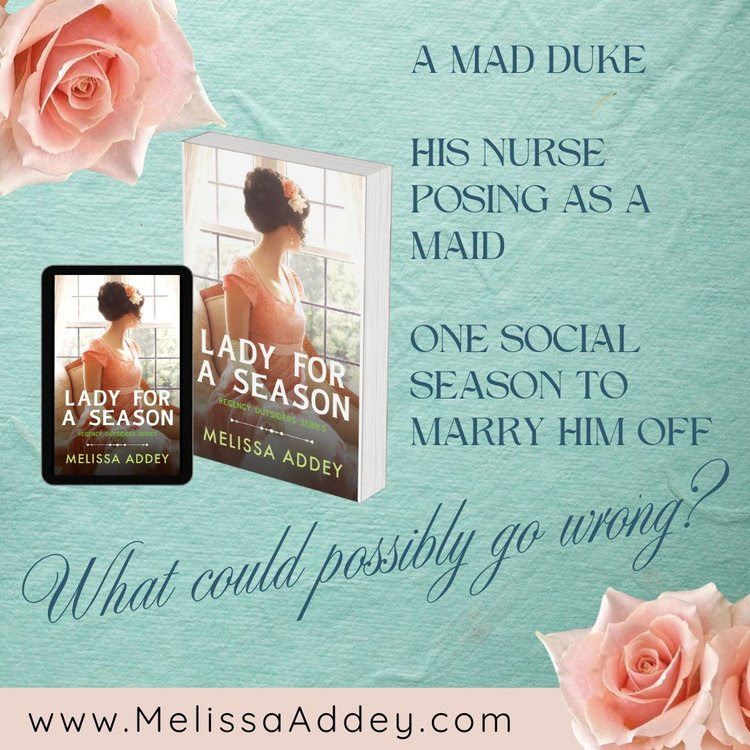
Melissa Addey writes historical fiction and has just released her first Regency romance, Lady for a Season, a delightful addition to the genre.
I asked her about her book and writing in general. Here's what she has to say.
What were the differences between writing historical fiction and historical romance and why did you try that new genre?
I’d just finished a series set in Ancient Rome which follows the backstage team of the Colosseum as they stage the gladiatorial Games. Some of the material was quite dark and I wanted something lighter. I thought writing a Regency romance would be full of pretty clothes, elegant manners and falling in love – so I wrote Lady for a Season and it’s been all of those things but also came with darker elements. History isn’t all sunshine! It’s been interesting just how shocked romance readers have been about some of those darker elements compared to my usual historical fiction readers, I think less pleasant parts of the Regency era are sometimes skimmed over, but I wanted my world to be accurate. I think it’s a warm love story and definitely a romantic ending, but it starts a little bleakly. My books have always had a romantic streak but I knew with a proper romance I’d have to make sure romance was always front and centre, I learnt a lot by reading many other Regency romances and seeing what I liked about that genre. I found my ‘mentor’ in Mary Balogh, who I feel often brings in something unexpected from the era which makes the romance harder but adds a lot of authenticity. I hope I can do the same.
What inspired you to write this book?
I had this idea of a My Fair Lady makeover for a girl pretending to be a lady, but also what happens if you’re locked away as ‘mad’ (which covered rather a lot of conditions in those times, many of them not really serious mental health conditions at all) and then have to come out of that place and be launched into high society? I like that it isn’t just Maggie (a maid) who is out of place, it’s Edward too, because although he was born into the ton, he’s been locked away for a long time and he doubts himself. I wanted them to grow together. And I’ll admit I liked the My Fair Lady element of making over Maggie, I spent an entire morning of research just creating a moodboard of her entire wardrobe, choosing pretty bonnets and gowns! You can see a fair bit of it on the Pinterest page for the book. https://www.pinterest.co.uk/melissaaddey/lady-for-a-season/
Who is your favourite character and why?
Although I love Maggie and Edward as the main characters and really like that they have an equal journey to feel sure of themselves and know their own worth, I got a surprise while writing when Honora (Lady Fortescue) opened her mouth. I plot my books, but my notes just said I wanted her to be a friend to Maggie and not be intimidated by high society because she was so intimately part of it. I wrote her opening lines where she lists all the eligible bachelors of the season and comments on each of them and found myself thinking “Oh, you’re a lot of fun.” I liked that she knew what the rules were but also could see high society for what it really is and make fun of it. She’s very scathing of that hallowed institution, Almack’s! She will get a book of her own as part of the series one day, as will many other minor characters… try and spot them as you read! I also liked Old John, the head of the stables. He says something important to Edward which made me (and Edward) a little misty-eyed. Often, it’s minor characters who catch my attention because I’ve spent so much time thinking about the main characters that I know them intimately but the characters around them may surprise me once I start writing.
Where do you write your books?
I’m very lucky to have a little office in my house, one whole wall is books and papers (mostly research) and I face the window. I have plants along the windowsill, including a cactus which started out the size of my thumb and now has turned into a huge mad Dr-Seuss-like creature with octopi-like tentacles everywhere, I love it. I have a little space just by my computer screen currently full of pretty shells as a sort of visual mood board for the next book I’m writing, The Viscount’s Pearl, another Regency romance in a standalone series I have planned. The series is called the Regency Outsiders because the main characters are somewhat out of the norm but still need to play by the rules of the ton.
What’s your go to beverage while writing?
In winter, Redbush Chai by Dragonfly Teas, it’s yummy. In summer, 1/3 beetroot juice topped up with ice and sparkling water, very refreshing though it does make it look like I’m downing pints of red wine!
If you’d like to explore Melissa’s writing, check out her website at www.MelissaAddey.com. If you’re a fan of historical fiction, you won’t be disappointed!
1908, the height of the British Empire. Clara’s autonomy is shattered when her long-absent husband summons her to join him at his eerie sect’s headquarters, insulated on a sparsely inhabited island in the Bahamas.
After a harrowing sea voyage, Clara and her children disembark into an unfamiliar landscape and climate. The children explore the marvels and mysteries of Andros Island and develop friendships with a Bahamian family, while Clara struggles to find her place as a woman within the cult.
But what seems at first to be a spiritual haven for Clara reveals itself to be a monster-worshiping cult intent on draining her family of more than their fortune.
Clara realizes that her quest for independence must mesh with her need to protect her children from the cult’s depraved attempts to consume their life essence.
Thanks for your interest. The ARC signups are now closed. To be part of the next ARC campaign, sign up for my email newsletter.





 BJ Sikes, author