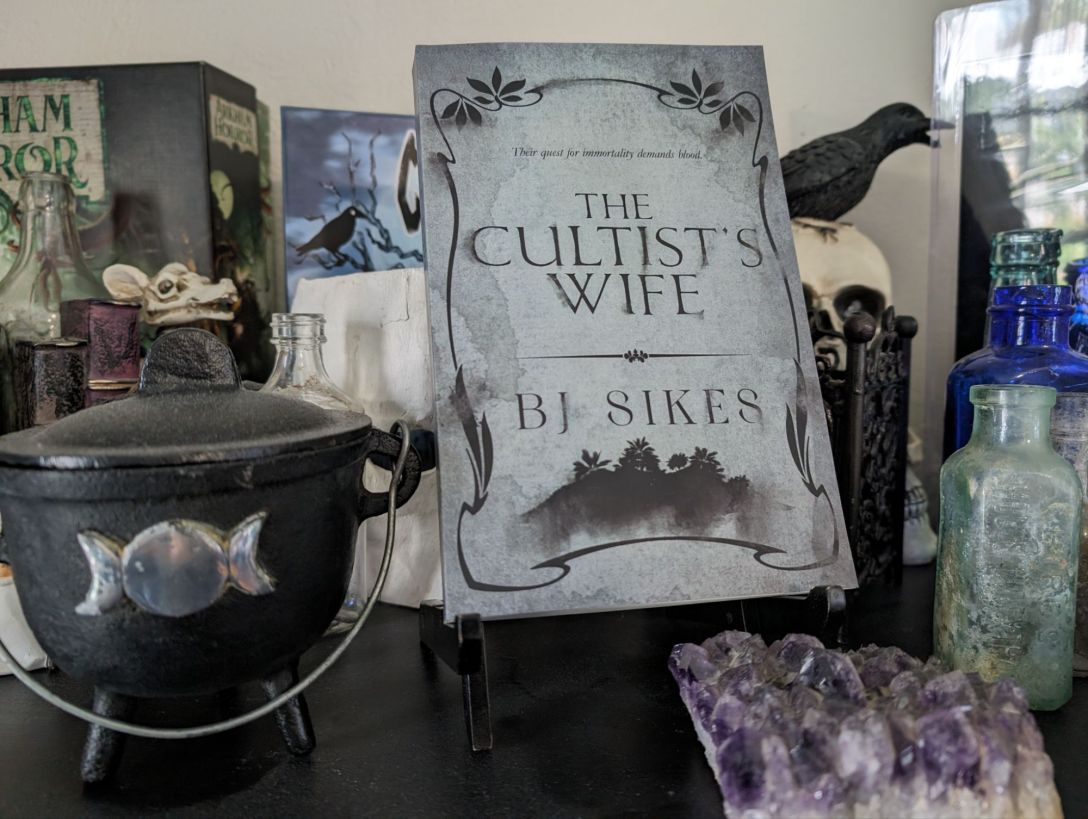
I published The Cultist’s Wife on the 1st May 2024 (YES, FINALLY) so for my dearest subscribers, I am giving you a sneak peak. This is the first scene of the book. Enjoy!
Near Bath, England, 1908
Fragrant smoke swirled around Clara, its spicy, musky scent relaxing her. She breathed deeply, released from her corset’s constraints. She was free for at least an hour or two this morning before her obligations descended again. Clara’s heavy silk robe caressed her body and she shivered with pleasure. She settled more comfortably onto the large cushion on the floor of her darkened sitting room and focused on the single candle flame in front of her.
A childish voice shrieked outside her sitting room. Clara sighed and glanced at the door.
Can’t Nanny manage the children for an hour? I just need some time to myself.
The noise faded and her sitting room grew quiet. She took a long steadying breath, trying to regain her inner peace. Her reading into Esoterica and Spiritualism had hinted at possibilities of life beyond the constraints and expectations of society. Her marriage, her home, even having children had all been others’ choices. She needed guidance on how to become her own person, to find her own happiness. Her knees ached as she knelt on the cushion, and she shifted. Her feet were numb and tingling. She wiggled her toes and exhaled.
How do the gurus sit like this for hours?
Gathering her focus again, she determined to sit still until her spirit guide manifested and gave her the advice she sought. She had never actually seen her spirit guide or spoken to him, but her references assured her of his presence. She just needed to focus long enough. It had been so much easier to see the spirit world when she was a child. Clara leaned forward and sprinkled more incense on the brazier. A cloud billowed up and she watched as patterns formed in the musky, intoxicating smoke. Coughing a little, Clara squinted in the darkness.
Was that a face in the smoke? Could he be manifesting to her finally?
Clara struggled to sit still. Her body tensed with excitement and her breathing came fast and shallow. The image coalesced further, and the face began to look familiar. She squinted in the gloom.
That face…it’s so familiar. Who is it? Oh no…it can’t be…
Disappointment fell heavy upon her. The face in the smoke resembled her long-absent husband Theophilus. But why would her spirit guide look like him? Clara scowled at the likeness of her husband’s face. This apparition couldn’t be her spirit guide. She had somehow conjured up a vision of Theophilus. Her heart thumped hard. Why should he appear to her now when he had been in the Bahamas for five years? Was he dead and his ghost was haunting her? As if in answer to her questioning, the mouth opened in a silent scream and the eyes grew wide in terror. Clara gasped and cringed back from the brazier. Cold crept across her skin. She shivered and reached for her shawl, draping it around her shoulders without shifting her stare from the phantasm. It continued to scream without making a sound, its gaping mouth opening and closing. She pulled the shawl closer, her hands clenching the fabric.
The ghosts I saw as a child never looked like that. I don’t think he’s dead. Perhaps he’s in danger.
The smoke drifted higher, and the phantasm dissipated. Tears filled her eyes. Clara rose off her pillow, wincing at the tingling in her feet. Theophilus’s portrait above the mantel, illuminated by the single candle, glared down at her. Life with that cold, brutal man had been joyless. She glowered back at the image, wishing she had the courage to take the painting down.
I wanted insight into becoming happy. Does the road to my happiness lie with helping Theophilus?
She shook her head, remembering all the times when he had laughed at her spiritual explorations. He would find it ludicrous if she told him about having a vision of him being in trouble. But she had been seeking guidance from her spirit guide. Would she have to go to the Bahamas to help Theophilus? She paced across the little sitting room to the window and pulled back the heavy drapes. The misty green countryside stretched away into the distance.
I don’t want to leave England to be with Theophilus. He’ll take over my life like he did when he was here.
Tears welled up in her eyes and she gulped, trying to suppress them. They poured hot down her cheeks. Clara pressed her trembling hands against her face, but the tears kept coming. Her sobs shook her body and she moaned, trying to catch her breath.
Stop it, stop it. Control yourself, Clara.
She shoved a fist into her mouth to stifle the undignified sounds and sank to her knees, head resting on the windowsill. She fought the urge to shriek her fury.
I can’t go. I hate him. I hate him.
Clara sucked in a harsh breath, shuddering. The anger dissipated as quickly as it had overtaken her, leaving Clara weak and empty, her face wet. She pulled out a handkerchief and wiped her tears away. She’d need to repair her ravaged face before tea. She looked back at the brazier. The manifestation had been so vivid. Was it a true seeing or guilt over her hatred of her husband? She couldn’t give up her quest for happiness to go to Theophilus because of this vision. Could she?
On a remote island in the Bahamas, Clara is drawn into her husband’s cloistered cult. As her children explore, they reveal the cult’s corruption but no one will listen. Will Clara realize the danger they’re all in?

 BJ Sikes, author